Pulmonary Hypertension
Pulmonary Hypertension |
- Living Well with Pulmonary Hypertension? Yes We Can! (A Rehab Specialist’s Advice) - Pulmonary Hypertension News
- Unexpected Life Lessons from My Hospital Roommate - Pulmonary Hypertension News
- Doctors Urge Early Diagnosis to Save Lives in PH, Other Rare Diseases - Pulmonary Hypertension News
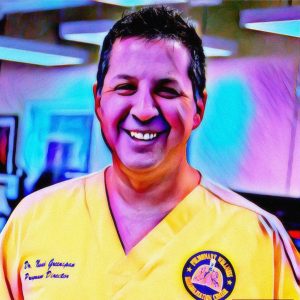
| Posted: 01 Mar 2019 12:37 AM PST Hello, World! For those of you who don't know me, my name is Noah Greenspan. I am the founder and program director of the Pulmonary Wellness & Rehabilitation Center in New York City. I am also the founder of the Ultimate Pulmonary Wellness Webinar Series, the Ultimate Pulmonary Wellness Facebook Group, the Pulmonary Wellness Research and Education Society, author of Ultimate Pulmonary Wellness, and creator of Pulmonary Wellness Online, our newest online pulmonary rehabilitation program. The book is available to read online, and the webinars are available to watch free of charge on our website: www.PulmonaryWellness.com. Are you starting to sense a theme? That is because nothing in the world gives me greater satisfaction than helping people with respiratory and/or cardiovascular disease breathe better, feel well instead of sick, and truly live their best lives instead of watching life pass them by from the sidelines. A big part of that involves dispelling myths and misinformation (of which there is a lot), an unfortunate byproduct of today's fast-paced healthcare environment. While information of varying quality regarding these subjects is available to those who are resourceful, finding this information and translating it into something that is both practical and useful is challenging, if not impossible. In addition, for every piece of solid information, there are infinitely more myths, misunderstandings, half-truths, and legends that are pervasive in the Twittering, Facebook age of Dr. Google's Instagram Snapchat. That's why I am thrilled to be joining the ranks of Pulmonary Hypertension News to help remedy that exact situation and help clear up any confusion you may have regarding your disease including the medical, behavioral, and lifestyle issues behind not just living, but living well and thriving, in spite of your cardiopulmonary condition. Over the next several months, I will share many of these principles with you. The good news is that the overwhelming majority of the information has come directly from the source itself: my patients. They are the true experts in the field, who have experienced many of the same struggles as you and found ways to overcome them, even when it seemed like all odds were against them, and you can, too. It is my hope that by sharing our collective knowledge and experience, you, too, will be able to experience your own little slice of "Ultimate Pulmonary Wellness." When someone is diagnosed with a chronic illness, particularly one like pulmonary hypertension (PH), that violates so many boundaries in people's lives, they are all too often relegated to a unifocal, monochromatic, barely recognizable version of their former selves. They are now the poor patient, sick, or even worse, the victim. To the medical community, they can become "the PH patient in room 2." Friends and family often don't know what to do or how they can best help, while at the same time, being kind to themselves as they, too, go through these traumatic adaptations in their own lives. Patients' lives often become very functional in nature, made up of doctor's visits, pharmacy runs, and a daily struggle for breath and survival; often completely devoid of any forms of aesthetic beauty like art, music, fashion, or fun, in other words, living. This, too, must change and is also one of the key themes behind Ultimate Pulmonary Wellness, where our mantras include things like: "yes we can," "inspired by LIFE," and "we rehab to live, not live to rehab." I first started treating pulmonary hypertension patients approximately 20 years ago, at a time when most of these patients were being rejected from cardiopulmonary rehabilitation programs because they were "too sick for rehab." These patients were extremely ill, often barely able to breathe, with oxygen saturations in the low 90s or even 80s at rest and plummeting into the 70s (or worse) with even minimal exertion. In many cases, they were unable to tolerate almost any activity due to fatigue, dizziness or syncope (fainting), weakness, and deconditioning. This was terrifying and not just for the patients. It was often scary for the clinicians treating them, and as a result, people's quality of life became worse and worse. That is when we first started experimenting with various exercise protocols and creative methods of oxygen delivery. After all, under the circumstances, did we really have that much to lose? By providing adequate supplemental oxygen (often 100 percent via non-rebreather mask), making adaptations to their programs to address the dizziness and syncope, and employing the right exercise protocols, patients actually demonstrated improvement. They became less short of breath and less dizzy. They could tolerate more exercise and higher levels of activity, and their oxygen saturation improved over time (both at rest and during exertion). And over time, as our collective understanding of PH, including earlier diagnosis and more effective treatment, continues to improve, so does patient quality of life. Over the past 27 years, I have come to believe there are five core pulmonary wellness and lifestyle interventions that carry substantially more weight and have a significantly greater impact than all others. These five areas include: medical — having the right healthcare team, taking the right medications, and taking them properly; pulmonary-specific exercise; pulmonary-specific nutrition; stress, anxiety, and depression management; and prevention of infection. Comprehensive patient and caregiver education is also important. We have found that all of these components work synergistically to support the PH family's best life. In each of these areas, there are specifics to the PH patient that are simply not common knowledge, even among many top "experts." One of the driving principles behind Pulmonary Wellness has always been that an educated patient is our greatest ally in the fight against cardiopulmonary disease and lack of information and understanding on the part of patients, family members, and even clinicians pose one of the greatest obstacles to a patient's ability to achieve their highest level of cardiopulmonary health and wellness. I must once again acknowledge my many patients, who are by far the driving force behind who I am as a clinician and who I strive to be as a human being. It is through these symbiotic relationships with the very people who come to me for help, allowing me to participate in their lives and getting to know them through their disease, that I am constantly learning about myself and continuing to grow, both professionally and personally. In sharing our collective experience with you, I hope to give you a direct link to the greatest source of information about your disease, in an effort to help you avoid some of the same pitfalls that others before you have had to deal with. One thing that I can tell you for certain is that even more gratifying than trial and error, is trial and success, especially when it comes to my patients. YES WE CAN! ***
Dr. Noah Greenspan, DPT, CCS, EMT-B, is a board-certified Clinical Specialist in Cardiovascular and Pulmonary Physical Therapy, with more than 25 years of cardiopulmonary physical therapy and rehabilitation experience. His book "Ultimate Pulmonary Wellness" — a continuing source of pride — was published in 2017, and he has made it available for all to read online free-of-charge using that link or by going to the center's website, www.PulmonaryWellness.com. His "Ultimate Pulmonary Wellness" Lecture & Webinar Series is also open to attend free-of-charge on the website. Dr. Greenspan founded the Pulmonary Wellness & Rehabilitation Center, a Manhattan-based physical therapy practice specializing in the care of patients with cardiovascular and pulmonary diseases, in 1998. Under his direction, the Center has conducted over 100,000 exercise sessions and has been named "Best of the United States" in the area of cardiovascular and pulmonary physical therapy.  |
| Unexpected Life Lessons from My Hospital Roommate - Pulmonary Hypertension News Posted: 01 Mar 2019 01:00 AM PST
My repeated hospitalization cycle since November has tested my physical and mental strength. When pain, fatigue, depression, and anxiety fill my thoughts, it is hard to see the positive. While in the hospital, a transition to a double-occupancy room restored my strength. Although the age difference between my roommate and me was over 60 years, I learned so much in the week of sharing a room with her. I thank her for helping me to see the good while enduring some of my life's worst days, and for restoring my hope, purpose, and fight. I'm thankful for these lessons and values gifted by her: Have patience. A hospital is one of the hardest places to have patience. It's nearly impossible to tune out the beeping monitors, call lights going off, and screams from other rooms. I can't begin to imagine all the crying and pained tears she heard from me on the other side of the curtain. Not once did she mumble under her breath about it or hint at how "annoying" it was. She showed patience and love the entire time. Sympathize with others without minimizing your struggles. Although she went through her own struggles just a few feet from me, she taught me how important it is to express sympathy for others in their difficult times. She never compared our stories. When we opened up about why we were in the hospital, it wasn't about who "had it worse." It was about sympathizing and empathizing in the ways we could. Don't settle for mediocre. After spending a week with my roommate, I can tell you with certainty that she is a woman who knows what she wants. I was filled with silent laughter and smiles each time she would make remarks about the hospital macaroni and cheese or the soup. As she ordered from the menu, all I could think to myself sometimes was, "Ewww, don't get that!" Shortly after, I knew we must have had the same taste in food because she made it clear that she didn't exactly love it. She didn't like the hospital ice cream and told the nurses she just wanted to go home and get Ben & Jerry's. If the food didn't taste right, she simply ordered something else — she refused to settle for mediocre. She knew what she liked and I knew she would make sure to get it. Life's too short for knockoff brand ice cream! Spread joy within the walls of a hospital room. It doesn't take an extravagant gesture to be "kind." Sometimes all it takes to turn someone's day around is a word of encouragement, moral support, and in our case, a love for the Patriots football team. Together in our room, my mom and I made signs to cheer on the team. The loudest of all of us during the championship game was the woman who was three times my age. Joy packed that room — you would have thought we were at a sports bar. Take the next step even when it's hard. From my roommate, I learned the importance of keeping my tenacity and fighting spirit alive. Seeing her walk the hallway as much as she did drove me to do the same. She was determined, fierce, and stronger than she probably realized. During the hospital stay, I learned that it's important to break free from technology and communicate in person. My life is changed because I got to know someone with the life experience I can only dream of having. Her actions and words make me look at my life differently. She made me think about how I was succeeding and thriving with pulmonary hypertension, and about what more I could do. I wasn't expecting a friendship with someone much older than me and I certainly wasn't expecting to learn so much from her. It was the unexpected that's made a lasting difference in my life. *** Note: Pulmonary Hypertension News is strictly a news and information website about the disease. It does not provide medical advice, diagnosis, or treatment. This content is not intended to be a substitute for professional medical advice, diagnosis, or treatment. Always seek the advice of your physician or other qualified health provider with any questions you may have regarding a medical condition. Never disregard professional medical advice or delay in seeking it because of something you have read on this website. The opinions expressed in this column are not those of Pulmonary Hypertension News or its parent company, BioNews Services, and are intended to spark discussion about issues pertaining to pulmonary hypertension.  |
| Doctors Urge Early Diagnosis to Save Lives in PH, Other Rare Diseases - Pulmonary Hypertension News Posted: 28 Feb 2019 05:35 AM PST A group of Canadian doctors highlighted the importance of an early diagnosis among those with rare diseases. The recommendation, released by the Pulmonary Hypertension Association of Canada, came out on Rare Disease Day, an international event every Feb. 28 to raise awareness of the 300 million people with rare diseases worldwide. Pulmonary hypertension (PH) is a rare, life-threatening disorder caused by a narrowing of the arteries in the lungs. According to statistics, 75% of PH patients living in Canada are diagnosed when their disease is already in an advanced stage, greatly reducing treatment efficacy and patients' lifespan. This was the case of Judith Moatti, a young woman living in Montreal, Quebec, who was hospitalized with what she thought was a gallstone crisis when in reality she was going into heart failure due to a complication of PH, for which she had never been diagnosed. "I don't think this is an issue of awareness; most doctors have heard of pulmonary hypertension," Sanjay Mehta, MD, a leading Canadian PH specialist and chair of the PH Association of Canada, said in a press release. "This is an issue of ignorance around recognizing and diagnosing the condition." To make the point that a timely diagnosis can make the difference between life and death among PH patients, a group of Canadian physicians released a series of videos to raise awareness of the condition and its symptoms among medical providers worldwide. More information on PH early diagnosis can be found here, and the videos can be accessed here. "Physicians in almost any branch of medicine will run into pulmonary hypertension patients. They present to family doctors and emergency rooms all the time, because they often have many complications of their disease if they're not diagnosed early enough," Mehta said. Not only adults can unknowingly have PH. The condition can also go unnoticed in children, as Angela Bates, MD, a leading pediatric PH specialist who is also participating in the initiative, noted. "The thing that sets pulmonary hypertension in children apart from other lung diseases is that a lot of these kids can live with it without any symptoms, and by the time they actually show up, they are very sick," Bates said. "They can be as sick as being in the [intensive care unit], as sick as dying from this disease." The clinicians finished on a positive note, saying that recent advances in research and treatment have given more hope to those affected by PH to receive an early diagnosis, and be offered the best possible treatment options. "It's important to recognize this as a treatable illness and that we have excellent therapies that are helping many patients with pulmonary hypertension," Mehta said.  |
| You are subscribed to email updates from "Pulmonary Hypertension" - Google News. To stop receiving these emails, you may unsubscribe now. | Email delivery powered by Google |
| Google, 1600 Amphitheatre Parkway, Mountain View, CA 94043, United States | |


Comments
Post a Comment